
Service
Garage Door Panel Replacement in Olympia
Cracked, dented, or rotted garage door panels are common on Olympia's 1980s-90s housing stock. Here's how the damage shows up, why it happens here, and what a repair job takes.
- Licensed & Insured
- Same-Area Service Calls
- Upfront Pricing
How It Shows Up
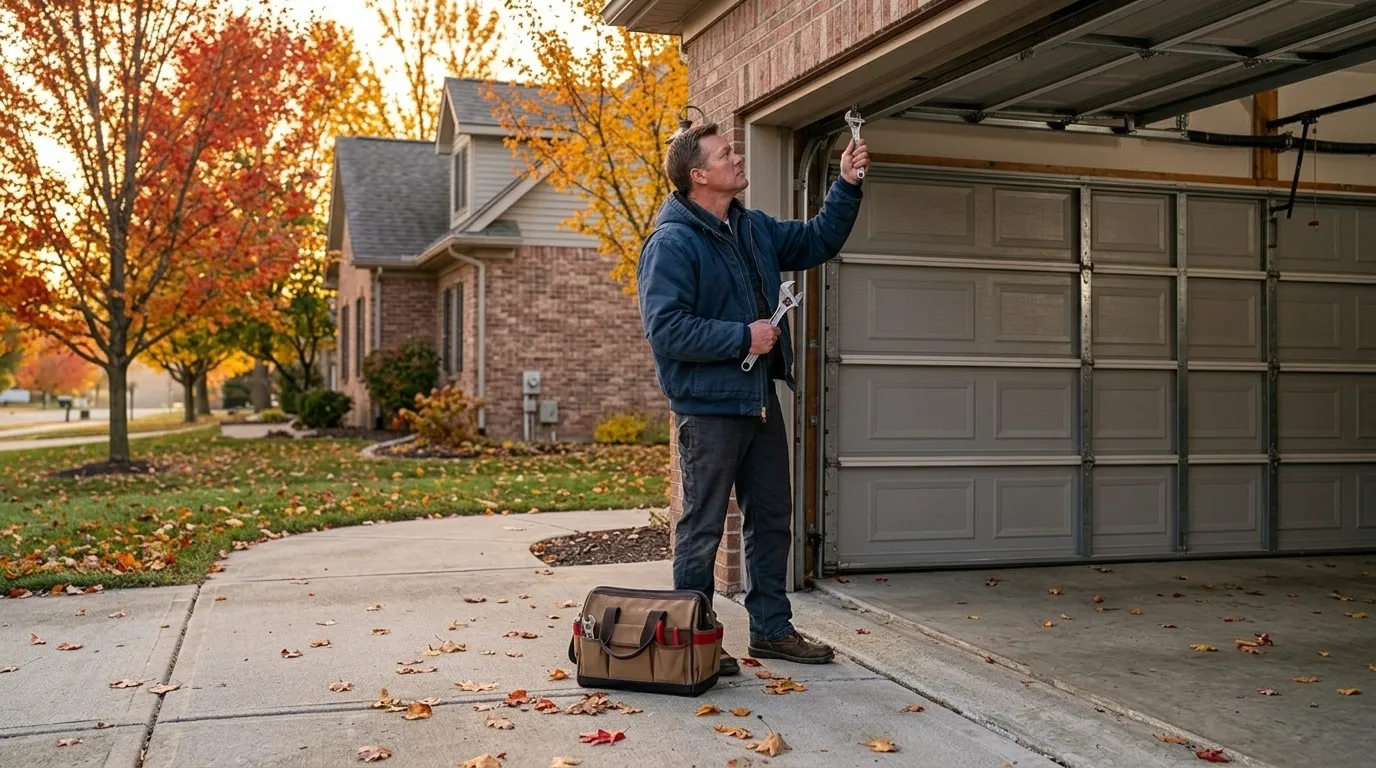
The first sign is usually a dent from a bumper tap or a stray basketball, and on a steel panel that dent doesn't stay put. It works into a crease along the seam, then the panel starts binding against the track every time the door cycles. On the wood-composite panels that were common in garage doors built through the 1980s and 90s, the failure looks different: the bottom rail swells, the paint or laminate cracks along the panel edge, and eventually a corner starts to rot from the inside out where water has been sitting against the frame.
You'll also see panels that have gone concave or bowed outward - not from impact, but from age. Steel skins separate from their insulation core after twenty-plus years of expansion and contraction, and the panel loses its flat face. On a double-wide door, one bad panel throws off the balance of the whole section, so the opener starts working harder to lift it and you hear a new grind or shudder partway through the cycle.
Across the service area's 17 named housing pockets, the pattern repeats house to house because so many garages were built to the same specs in the same stretch of years. If your neighbor's door started showing the same dent-then-crease pattern a year or two before yours did, that's not a coincidence - it's the same door, the same install year, and the same slow failure.
Why This Fails Locally
Most housing in the service area went up between 1975 and 2004, with the median build year landing around 1990. That means a large share of the garage doors still in service are original steel or wood-composite sections from that build wave, running on hardware nobody stocks new anymore. Panels from that era used thinner steel gauges and lighter insulation cores than what's sold today, so they take dents deeper and hold them longer.
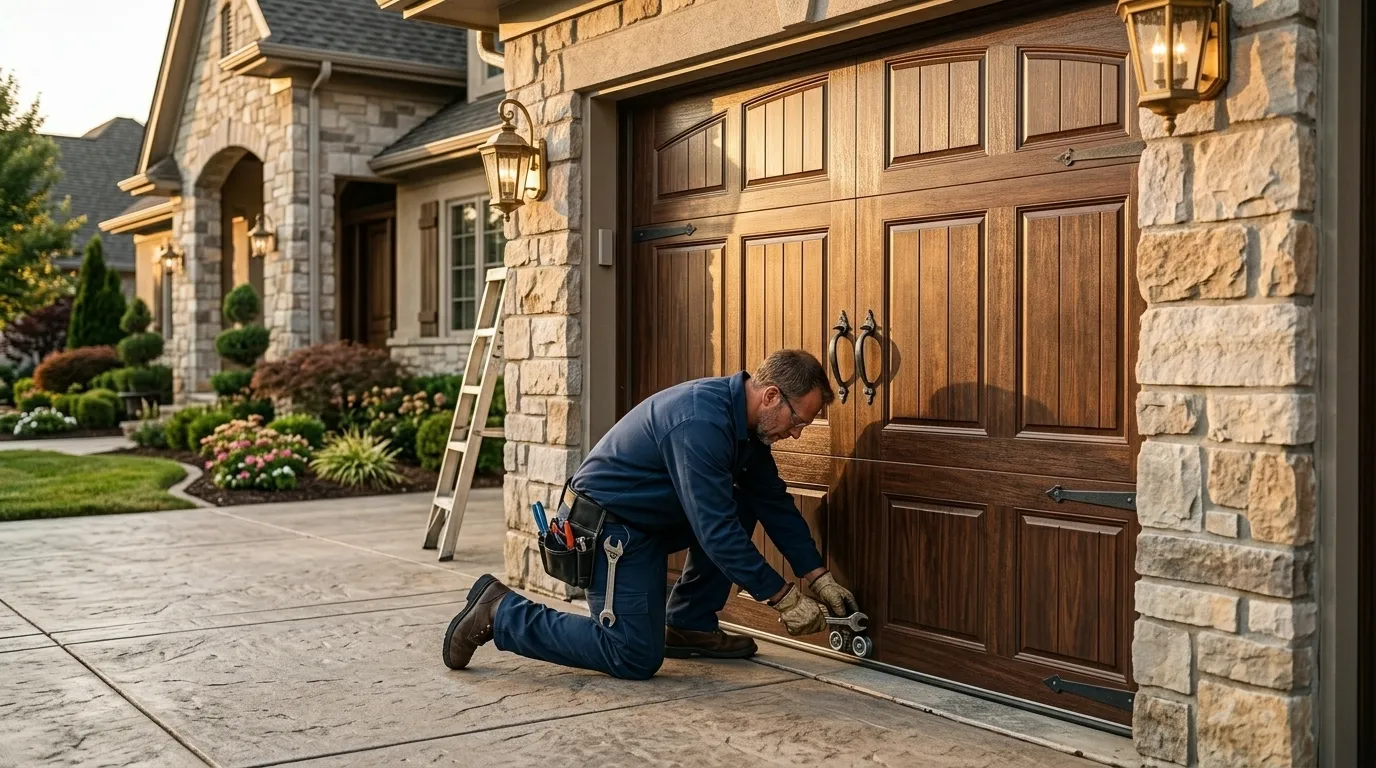
Olympia sits in a cold, moderate climate band, and that matters more for panels than people expect. An unheated garage here goes through repeated freeze-thaw cycles over the winter, and that cycling works at the seams between panel sections and at the screw points where hinges attach. Steel contracts in the cold and expands again once temperatures climb, and over enough winters that flexing loosens the hinge bite and starts hairline cracks at the fold lines - especially on doors that were already carrying an old dent.
Wood-composite panels from the same era have their own version of the same problem: moisture gets into the panel through a chip or a failed seal, and the cold slows the drying-out period way down compared to a warmer climate, so rot has more time to take hold before anyone notices. None of this is a fast failure. It's a decade-plus process that shows up as a bad panel right around the time a house built in the 1990s hits its 30-year mark.
How Long It Takes
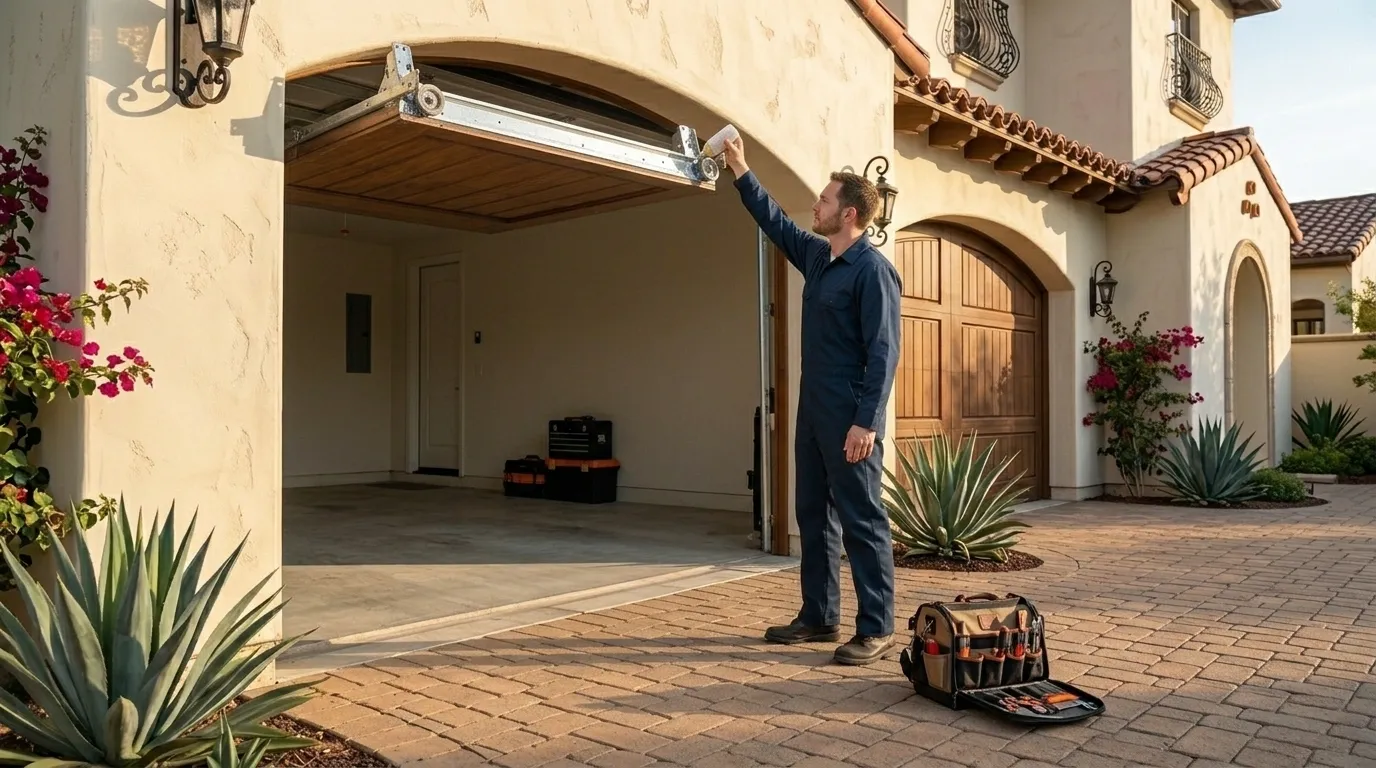
A single-panel swap on a standard door, once we've got the right panel in hand, is usually a same-visit job - a few hours from removal to a door that cycles clean again. The harder part is sourcing the panel.
If your door is a common width and a common design, that's straightforward. If it's an older run from the 1980s-90s build wave with a discontinued panel profile, we're matching color, rib pattern, and panel height to a door that may not have an exact replacement anymore, and that can mean special-ordering or looking at a close match instead of an identical one.
Multiple damaged panels on one door change the math. At that point we're not chasing a match section by section - we're pricing out whether replacing three or four panels costs close to what a new door would, and usually it does. A double-wide door with age-related bowing across several panels, not just one impact dent, is the clearest case where panel-by-panel repair stops making sense.
We won't quote a full timeline without seeing the door and knowing what's available for that panel style, but a straightforward single-panel job doesn't need to tie up your garage for days.
Can You Do This Yourself
Swapping a single panel is mechanically simple if you can get a matching one and you're comfortable pulling the door off its rollers safely - it's not a job that requires touching the spring system, which is where the real risk lives. If your door has a torsion spring under tension, leave that part alone regardless of what you're doing to the panels.
Where people get into trouble is buying a panel that's close but not exact - wrong rib count, slightly off color, or a hinge spacing that doesn't quite line up with the rest of the door - and forcing it into place. That throws the door out of balance section to section, which stresses the opener and can crack the new panel at the fold within a year.
Honestly, if you've got the panel in hand and a helper, and it's a bottom section on a door with no torsion spring exposure, this is doable. If it's a mid-panel on an older door where the exact match doesn't exist anymore, that's the point where a mismatched fix costs more than calling in the first place.
Jobs Like Yours
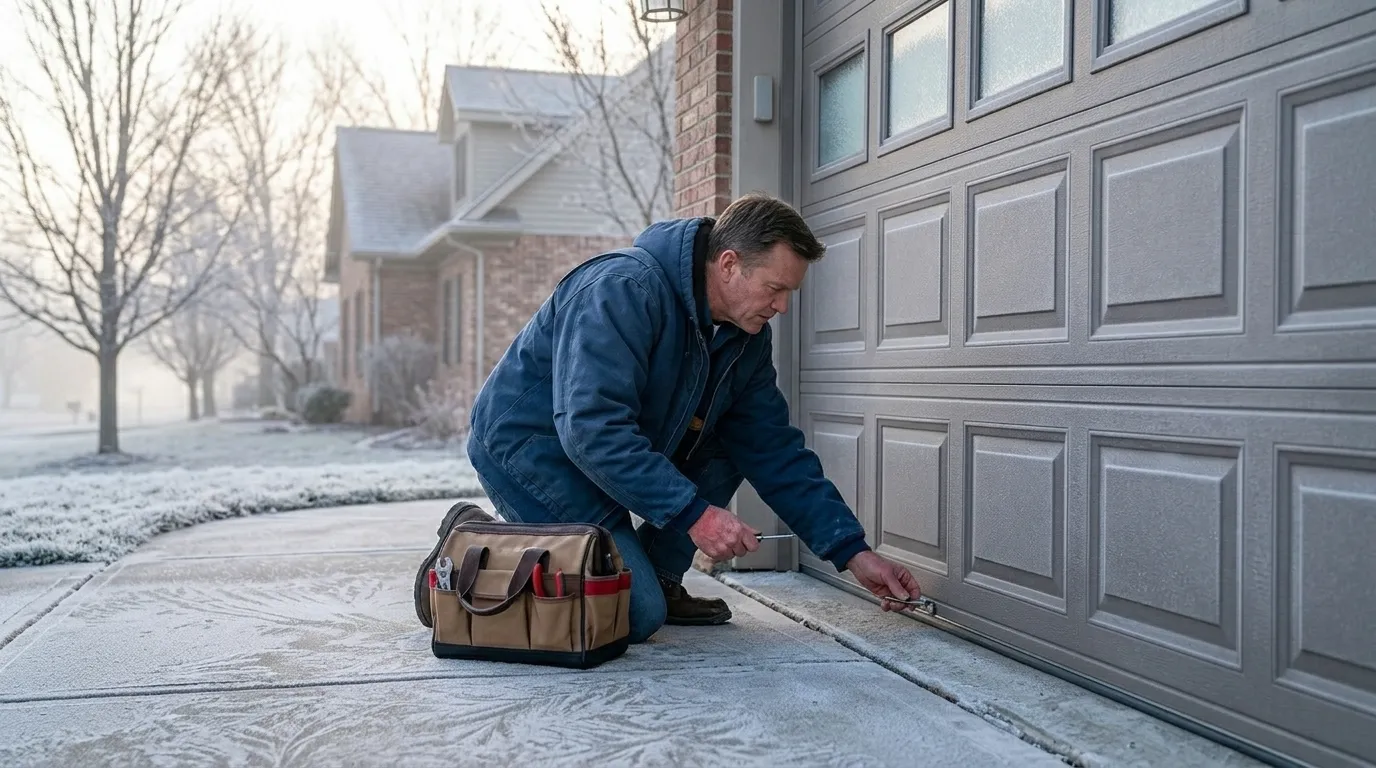
Recent work from this service line.
Talk to a Technician Before You Book
Describe what the door is doing and get a straight answer on what it likely needs.
Why Olympia Calls Us
What Happens When You Call
-
1
Call or Request a Quote
Tell us what the door is doing and roughly how old the house is - that alone points us toward the likely part before a truck leaves.
-
2
On-Site Diagnosis
A tech checks the spring, cables, tracks, and opener in person and tells you plainly what is actually wrong.
-
3
Straight Price, No Surprises
You get a number before any work starts. It covers parts and labor, nothing added after the fact.
-
4
Fixed the Same Visit
Most repairs are done in one trip. If a part needs sourcing, we tell you that upfront instead of guessing.
Frequently Asked Questions
Can I replace one panel without replacing the whole garage door?
Often yes, if the panel style is still available or close enough to match. Doors built during Olympia's big 1975-2004 construction wave sometimes used panel profiles that are hard to source now, so the honest answer depends on what's on your door - we'd need to look at it before promising a single-panel fix.
Why do my garage door panels keep bowing even though nothing hit them?
Age and climate cycling, not impact. Steel panels expand and contract through the cold-season freeze-thaw pattern here, and after two or three decades that flexing works the panel out of flat. It's slow, which is why it looks like it happened overnight.
Is it cheaper to fix one bad panel or replace the whole door?
For one clean panel with an available match, repair is usually cheaper. Once you're looking at three or four damaged panels, or a discontinued panel profile, the sourcing and labor can approach the cost of a new door - we'll tell you straight which side of that line your door falls on.
How do I know if it's a panel problem or a spring problem?
A bad panel shows as a visible dent, crack, bow, or rot spot, and the door usually still opens, just roughly. A spring problem shows as the door feeling heavy, refusing to stay open, or the opener straining on every cycle. If you're not sure, don't force it - a stuck door under spring tension is not a DIY diagnosis.
Need Garage Door Panel Replacement in Olympia?
Call now for straight answers on cost and timing.