
Olympia Garage Door Guide
What Garage Door Problems Actually Cost in Olympia
Olympia's housing dates mostly from 1975-2004, with a cold, wet climate that stresses springs and tracks. Here's what repairs cost and what fails first.
- Licensed & Insured
- Same-Area Service Calls
- Upfront Pricing
What It Costs
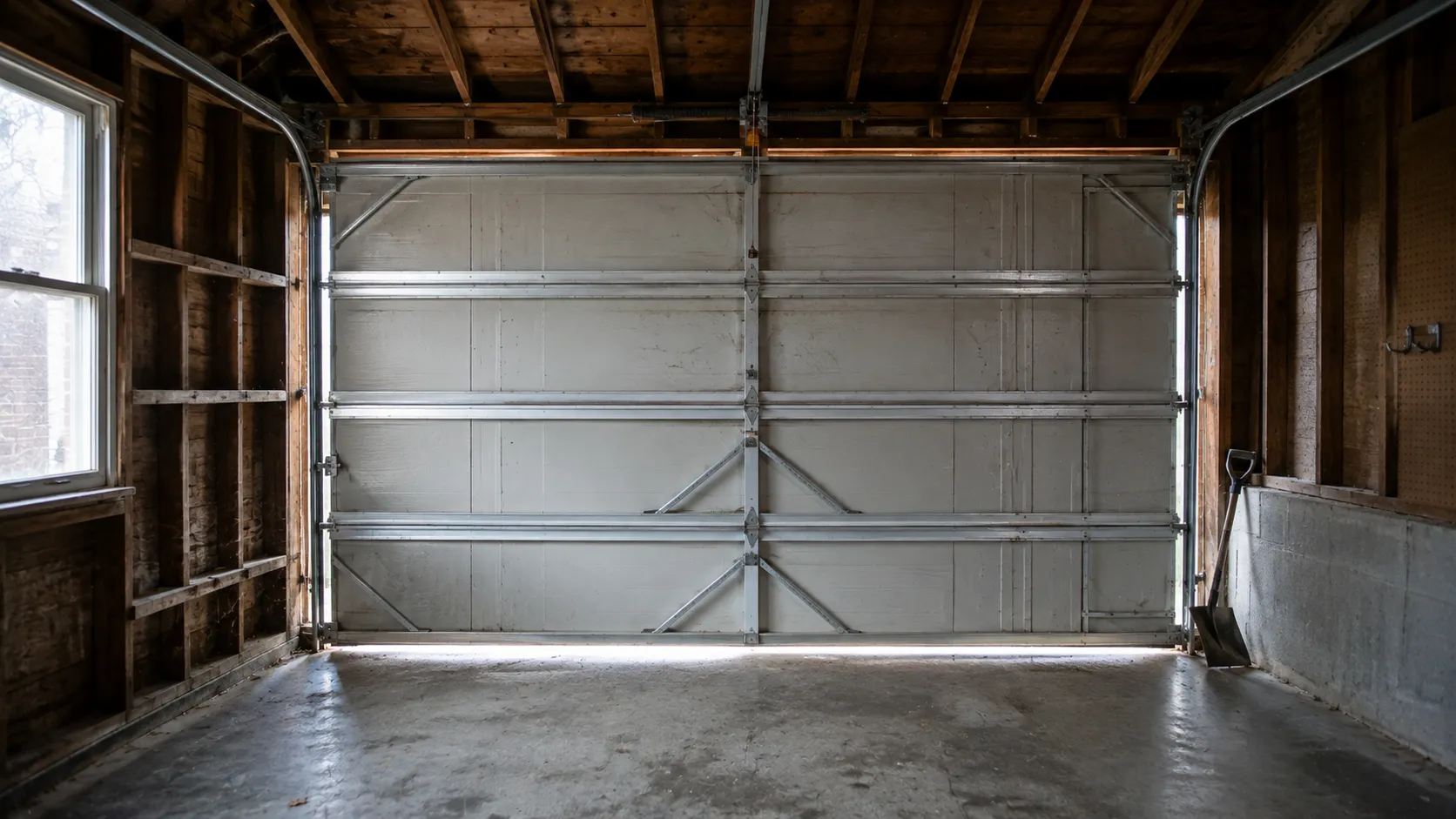
We can't quote a number on a page - every job depends on spring size, opener age, and whether the track is bent or just dirty. What we can tell you is what drives the bill in this area specifically. Most houses we get called to here went up between 1975 and 2004, with the heaviest concentration in the 1980s and 90s across the 17 areas we cover.
That means a lot of double-door torsion setups sized for original steel doors, not the heavier insulated panels people are installing now. Swapping in a heavier door without upgrading the spring is the single biggest reason a job costs more than the homeowner expected - the old spring can't lift the new weight, so it's not a repair anymore, it's a full spring-and-cable job. With a median household income of $88,500 across the service area, we see more owners choosing full opener and door replacement over patching a 30-plus-year-old unit, simply because parts for those original openers are getting harder to source.
If your door and opener are both original to a 1985-1995 build, expect the conversation to include replacement, not just repair.
What the Weather Here Does to It
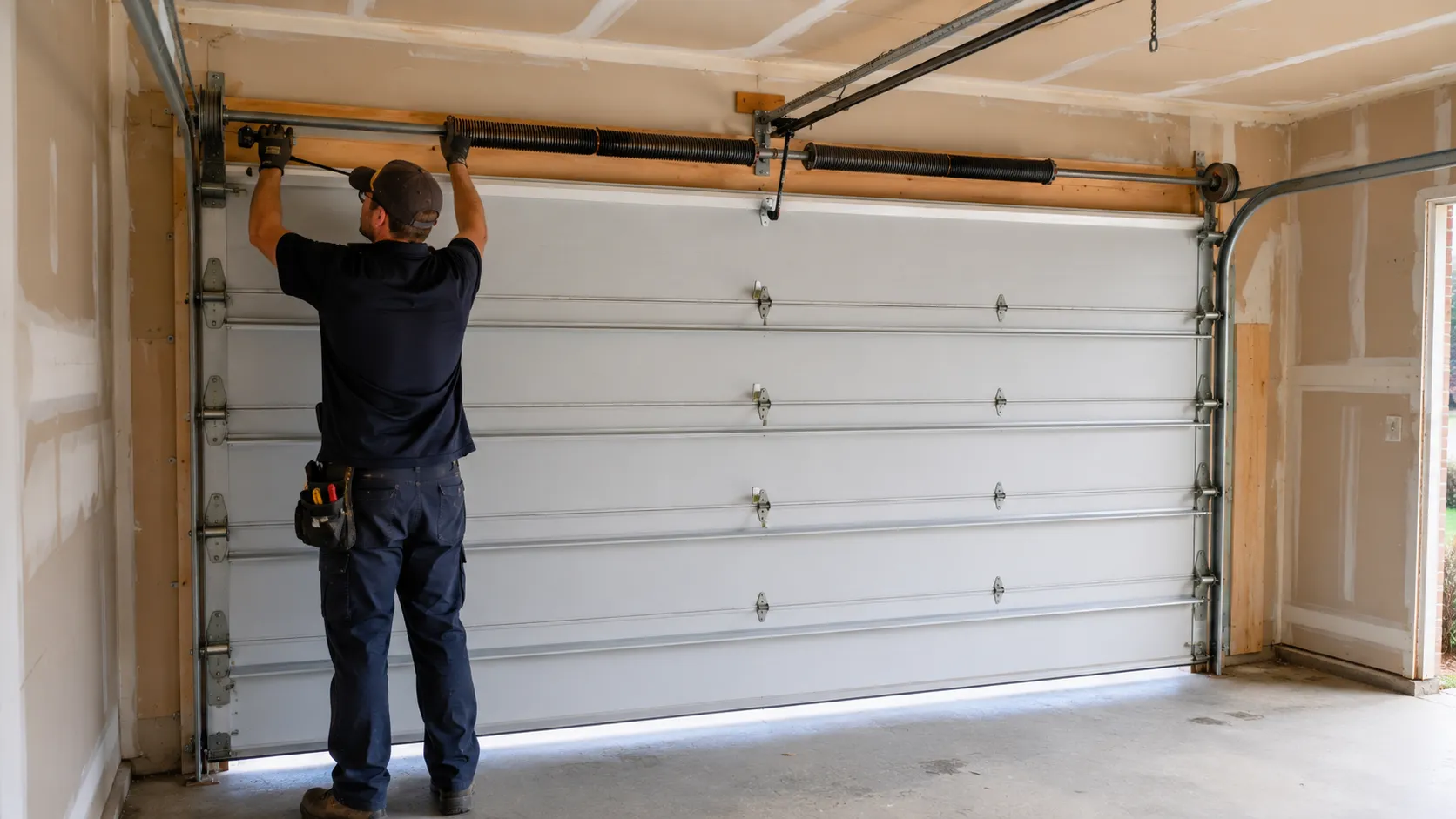
This is a cold, moderate climate - not brutal cold, but wet and cold enough, for long enough, that steel takes a beating. Tracks and rollers on the 1975-2004 housing stock around here sit through months of damp air, and unlubricated steel tracks start to show surface rust well before they fail outright. Torsion springs coated decades ago hold up fine until a cold morning tightens the coil and something that was already fatigued lets go.
We also see condensation inside older, uninsulated steel doors from that era - panels sweat, the bottom seal gets soft, and the door starts dragging on the track from moisture, not misalignment. None of this is dramatic weather. It's just steady dampness working on hardware that was never sealed against it in the first place.
Doors on newer builds with foam-core panels handle it better; original single-layer steel doors from the 80s and 90s are the ones we get called out for most in the wetter months.
The Situation
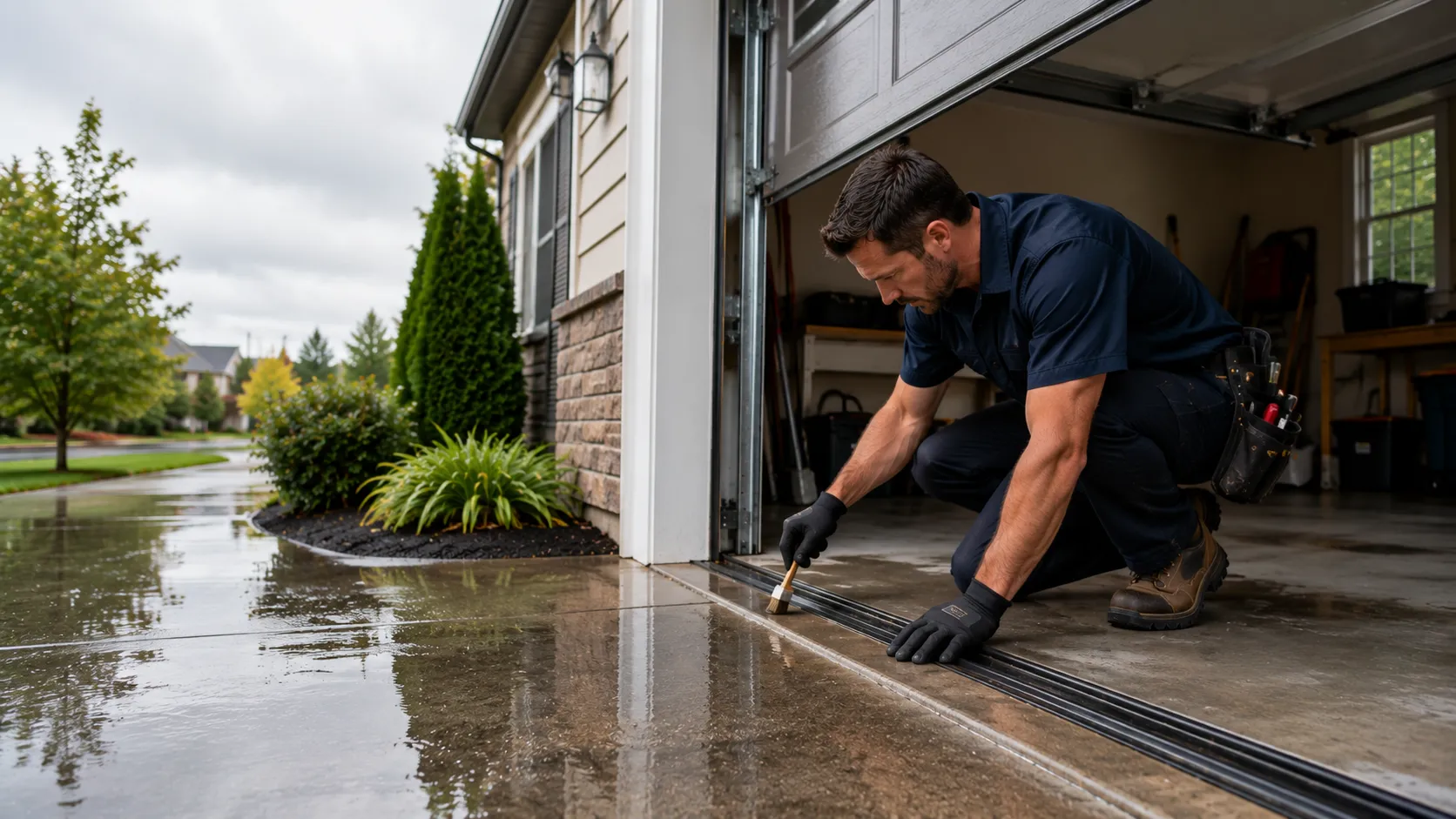
We cover Olympia and the surrounding area out to about 18 miles - Tumwater at 4 miles, Tanglewilde at 5, Nisqually Indian Community at 10, DuPont at 12, Anderson Island and Tenino at 13, Yelm, Rainier, and North Yelm at 14, Shelton at 16, Steilacoom, Roy, and Rochester at 17, and Grand Mound, McCleary, McKenna, and Fox Island at 18. Downtown sits right at the shop, and the North East side is about 2 miles out.
Across that footprint there are roughly 36,621 households, with about 17,750 owner-occupied houses carrying a garage door that's likely original or close to it. That's a lot of 1980s and 90s hardware still in service, on both sides of a fairly wide radius, which is why we keep parts on hand for older torsion setups rather than only stocking what fits new builds.
The Common Mistake
The mistake we see most is treating a stiff or noisy door as a lubrication problem when it's actually a spring problem. On houses from the 1975-2004 stretch, springs are now 20 to 45 years old, and a spring that's lost tension doesn't always snap dramatically - sometimes it just gets weaker year over year, and the opener starts working harder to compensate until the opener itself burns out. Oiling the track masks the noise for a few weeks and doesn't touch the actual cause.
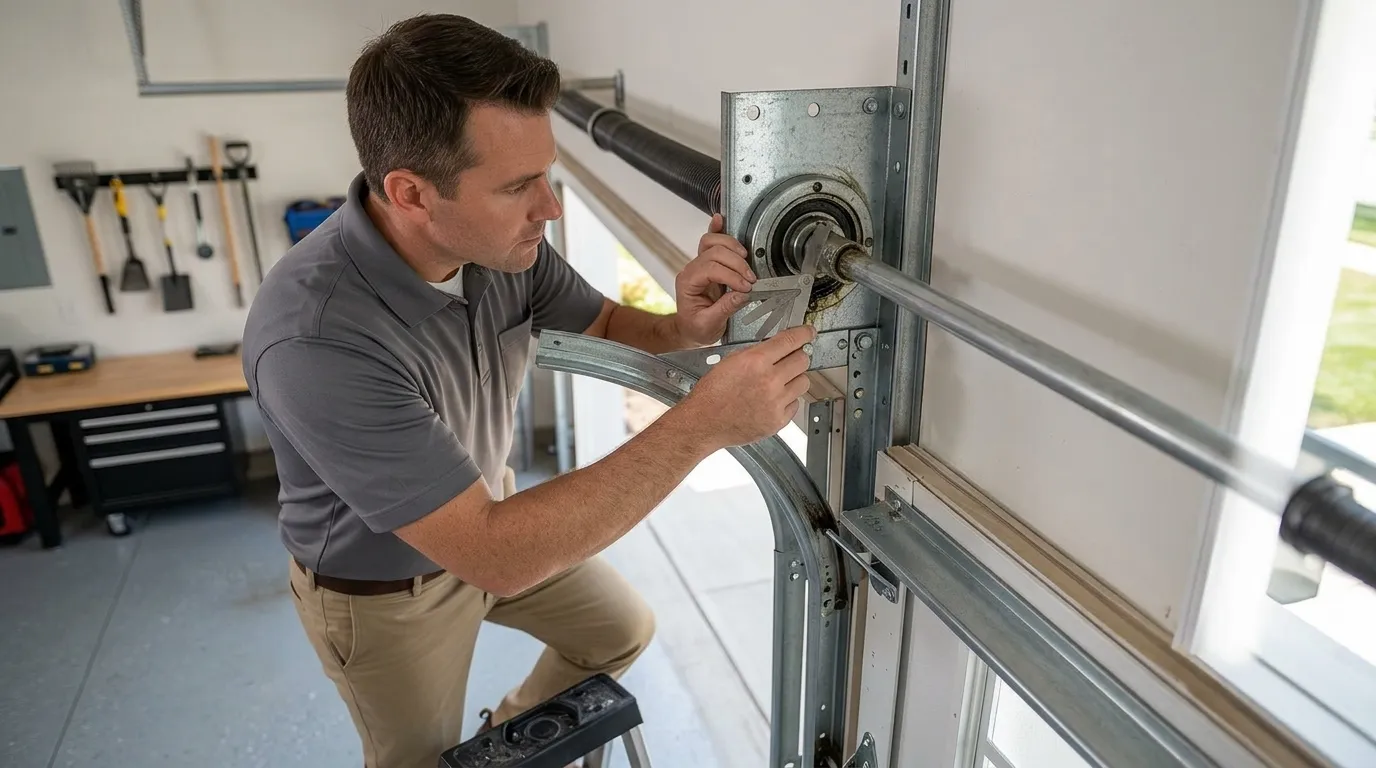
The other version of this mistake is DIY spring adjustment on original torsion hardware from that era - the winding cones and end bearing plates on older doors weren't built to today's tolerances, and adjusting them without the right bars is how people get hurt. If your door is original to a build from the 80s or 90s and it's started groaning under load, that's a spring conversation, not an oil-can fix.
How We Can Help
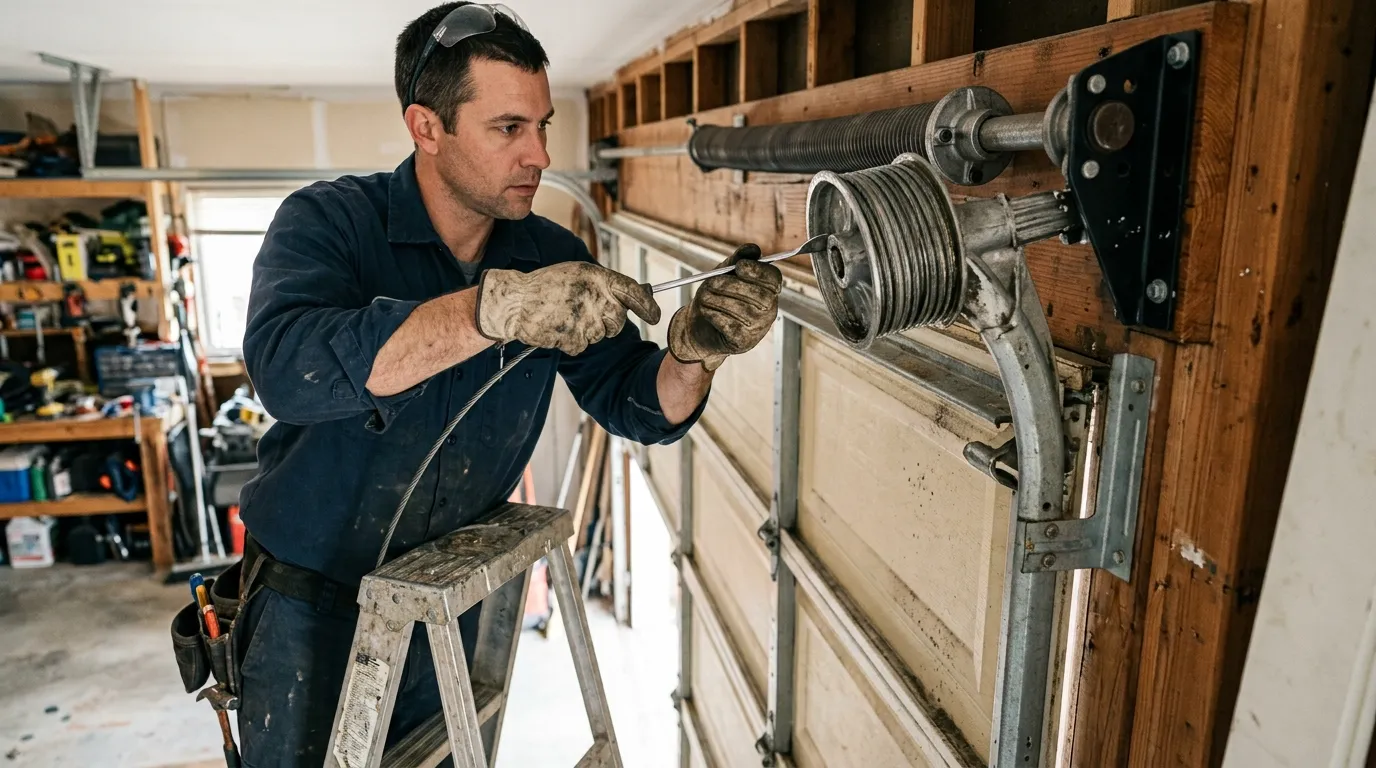
Garage Door Repair
Springs, cables, tracks, rollers, and openers fixed by a tech who explains the problem before touching anything.
Learn more →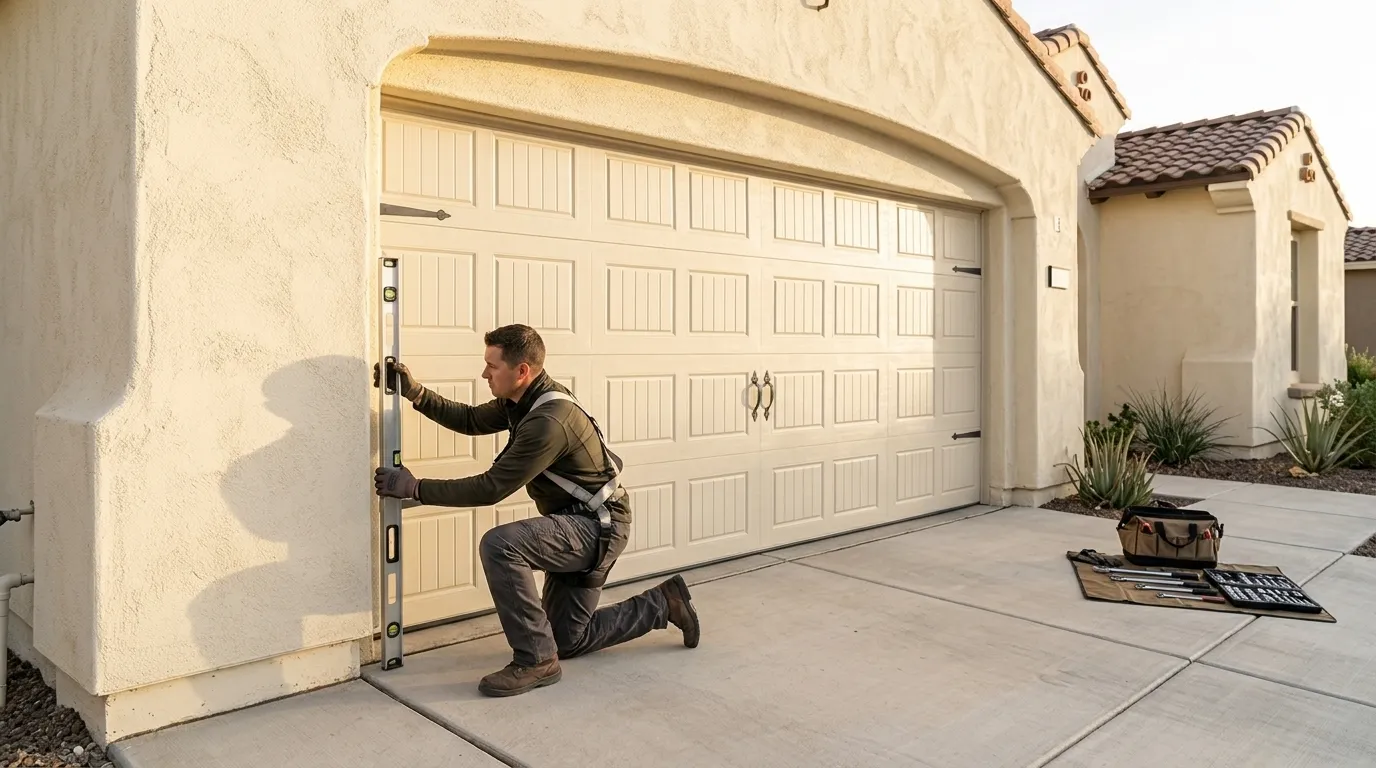
Garage Door Installation
New sectional doors sized and installed for the housing stock actually built in this area.
Learn more →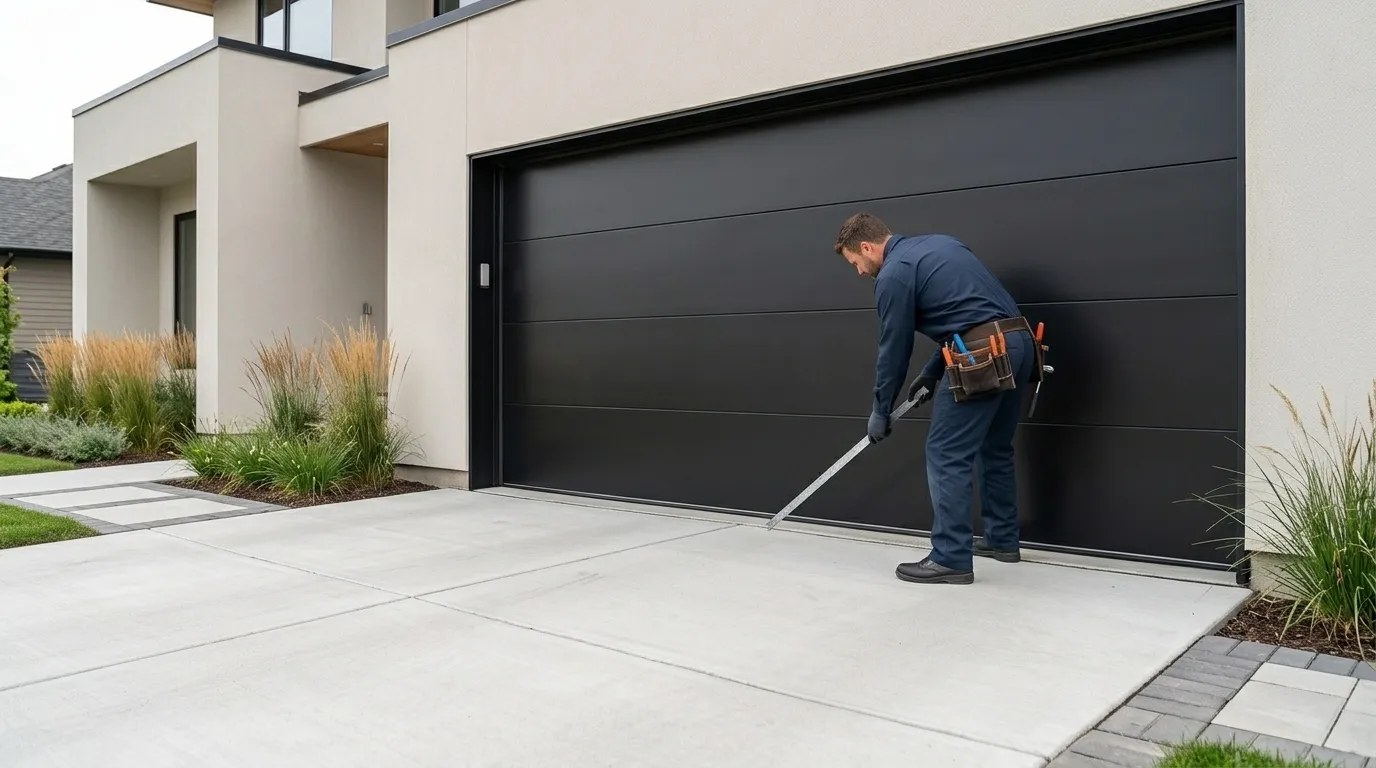
Garage Door Service
Tune-ups, lubrication, and safety checks that catch a small problem before it becomes a service call.
Learn more →Frequently Asked Questions
Why does my garage door feel heavier in winter?
Cold, damp air stiffens grease in the rollers and can tighten an already-fatigued torsion spring just enough that the opener struggles to lift the door. It's common in this climate on doors with original hardware from the 1975-2004 building period, and it usually means the spring is near the end of its life, not that something is broken outright.
Is it worth repairing an opener from the 1990s?
Sometimes, but parts for openers that old are getting harder to find, and once the circuit board or drive gear goes, repair can cost close to what a new unit runs. If your opener is original to a 1980s or 90s build, we'll look at it before quoting, but replacement is often the more practical call at that age.
How often should I check the springs?
Once a year is reasonable, more if the door is original to an older build. In this climate, moisture and cold cycles wear on steel steadily rather than suddenly, so a spring that looked fine last winter can be noticeably weaker a year later. A quick visual check for gaps in the coil or rust is worth doing yourself between visits.
Do you work outside Olympia proper?
Yes, we cover the surrounding area out to roughly 18 miles, including Tumwater, Tanglewilde, DuPont, Yelm, Shelton, and the other communities in that radius. Travel distance can affect scheduling on the same day, so it helps to mention your area when you call.
Have a Door That Needs a Second Opinion?
Call and describe what it is doing - we will tell you what it likely is.