
Olympia Garage Door Guide
Why Your Garage Door Slides Off Track
Olympia homes built 1975-2004 often have track brackets loosened by decades of cold, wet winters. Here's why doors go off track and what actually fixes it.
- Licensed & Insured
- Same-Area Service Calls
- Upfront Pricing
What It Costs
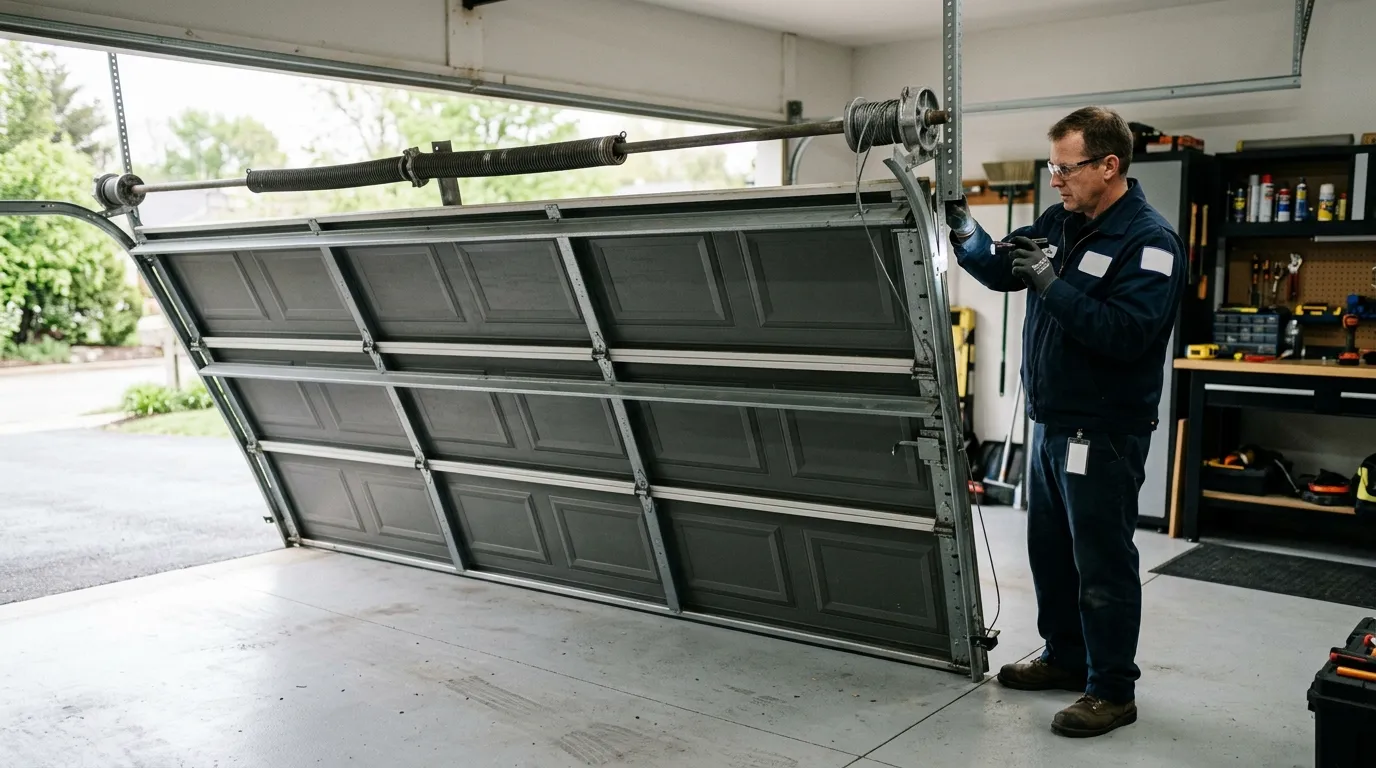
We're not going to put a number here that doesn't hold up once we're standing in your garage. What a track repair runs depends on whether the rail itself is bent, whether the brackets pulled out of the jamb, and whether the rollers are the original steel ones that came with the door. A lot of the houses in this service area went up between 1975 and 2004, and that thirty-year window covers three or four different bracket and rail styles, so a straight roller swap on one house can turn into a full rail replacement on the next one built the same decade.
If we tell you a flat price before we've seen the track, we're guessing, and guessing on a garage door quote is how homeowners end up paying for a second visit. What we can tell you: a bent section of rail almost never gets fixed by bending it back. Once steel rail kinks, it's stressed at that point permanently, and it'll walk out of alignment again within a season.
That's a part swap, not a repair, and it's worth knowing before you decide to just live with the noise.
What the Weather Here Does to It
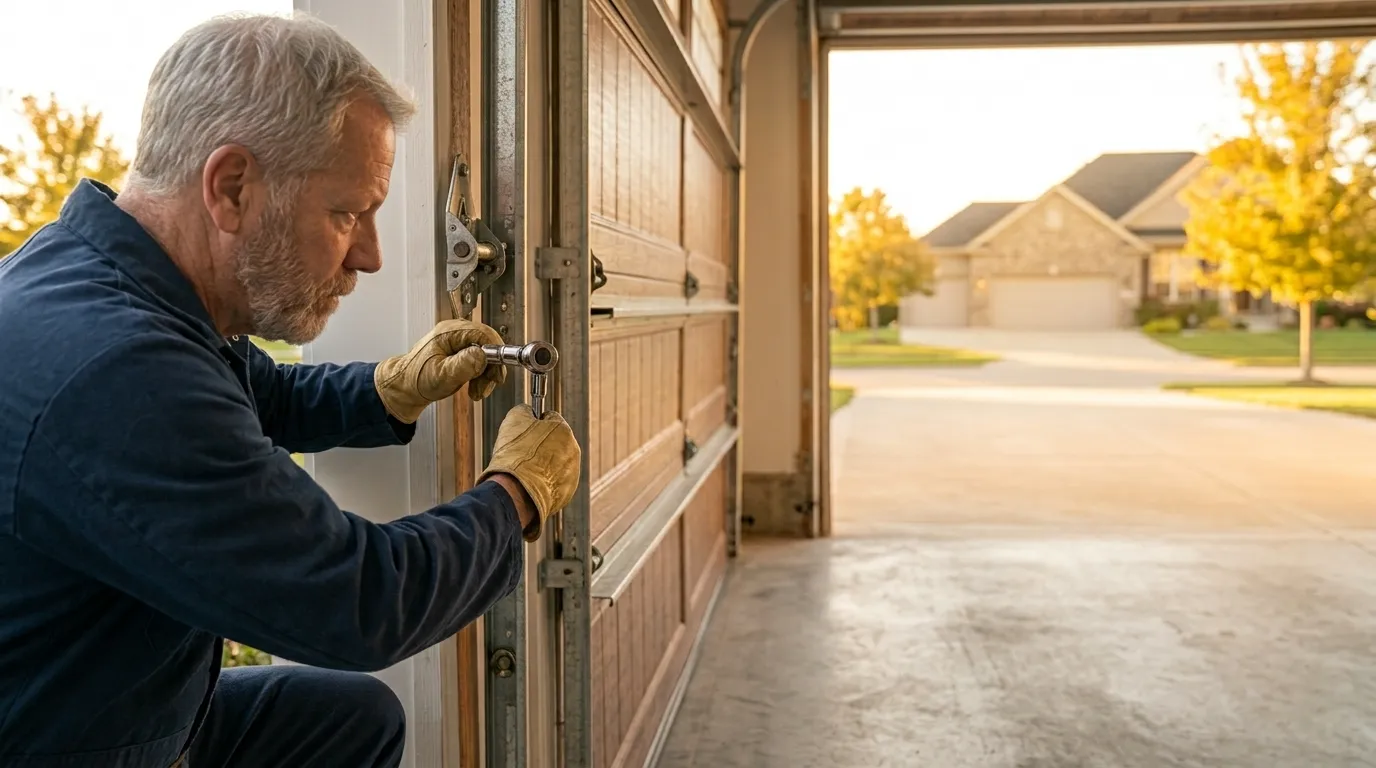
Olympia sits in a cold, moderate climate band, which in practical terms means the garage frame goes through a real wet season and a real cold stretch every year, not extreme heat and not brutal ice, but steady damp and steady chill that work on wood and steel differently than a dry climate would. The jamb studs that your track brackets are lag-bolted into swell slightly with moisture through the wet months and shrink back as things dry out. Do that every year for twenty or thirty years and the bracket holes loosen.
A bracket that's loose by even an eighth of an inch lets the rail drift a fraction with every open-close cycle, and that fraction adds up until the rollers are riding the edge of the track instead of the center of it. Cold mornings make it worse in a different way: the grease in older rollers stiffens up, the door jerks a little harder on the first pull of the day, and that jerk is exactly the kind of shock that knocks a rail loose that was already borderline. None of this is dramatic weather.
It's the ordinary damp-cold cycle doing slow, cumulative work on hardware that's been there since the house was built.
The Situation
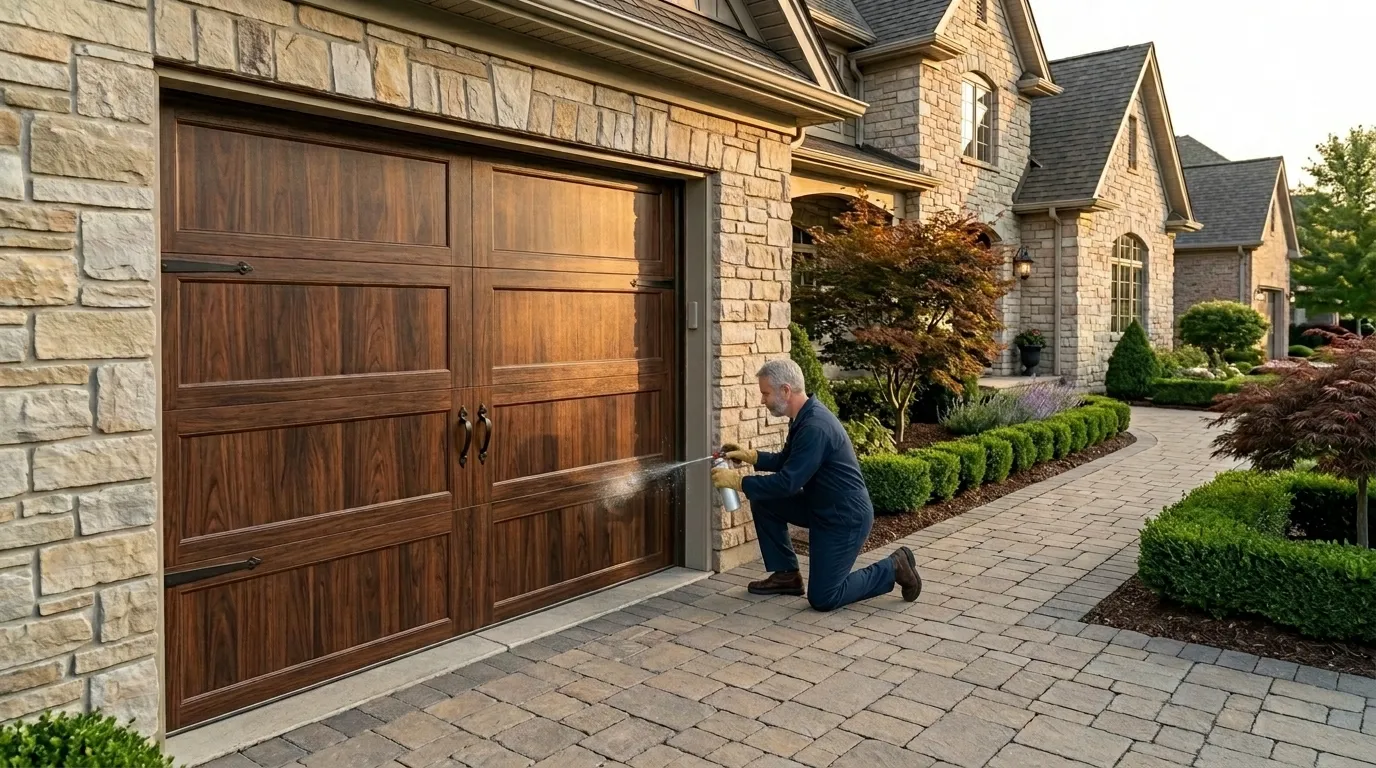
Across the areas we run calls in - Tumwater, Tanglewilde, the Nisqually area, out toward DuPont and Yelm, in through downtown and the North East side - the housing stock is unusually consistent. Most of it went up in that 1975-2004 window, with the median build year sitting around 1990, and most of the 17,750 owner-occupied houses across this service area are carrying garage hardware from that same era or an early replacement of it. That matters for track problems specifically because the bracket-and-rail systems from those decades weren't built with the adjustable slotted brackets you see on new installs.
They're fixed-position, which means once a bracket pulls loose or a stud shifts, there's no slack to take up. The door either rides right or it doesn't. With 36,621 households in the area and a median income of $88,500, most owners here aren't in a rush to replace a whole door over a track issue, and they don't need to - but the fixed hardware means a track problem on a house this age tends to need an actual bracket or rail swap rather than a quick tightening.
The Common Mistake
The mistake we see most is someone hearing the door scrape or grind, noticing it's caught on the edge of the rail, and pushing it back into place by hand or with a pry bar before running it again. That gets the door moving, but it doesn't fix why it walked off in the first place, and on a rail that's already lightly bent, forcing it back square just re-bends it in a slightly different spot. The other version of this mistake is spraying the rollers and hinges with a general lubricant and calling it done.
That quiets the noise for a week or two, but if the actual cause is a loose bracket in a jamb that's moved with the seasons, lubricant does nothing for the bracket. One honest limit on our end: if the rail is bent in more than one place, or the bracket has pulled far enough out of the stud that the wood around the lag bolts is chewed up, that's not a tighten-and-go repair. At that point replacing the section is the faster and cheaper fix, even though it sounds like the bigger job.
How We Can Help
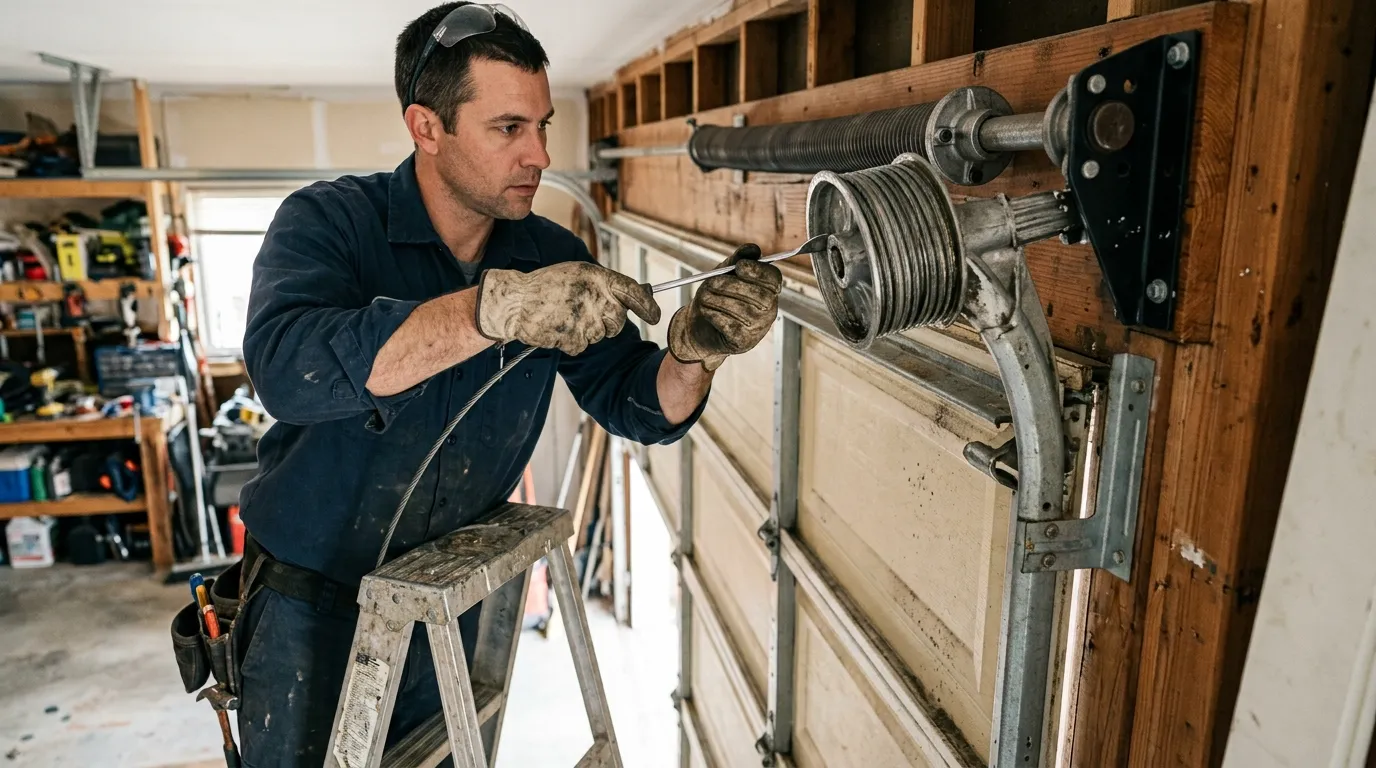
Garage Door Repair
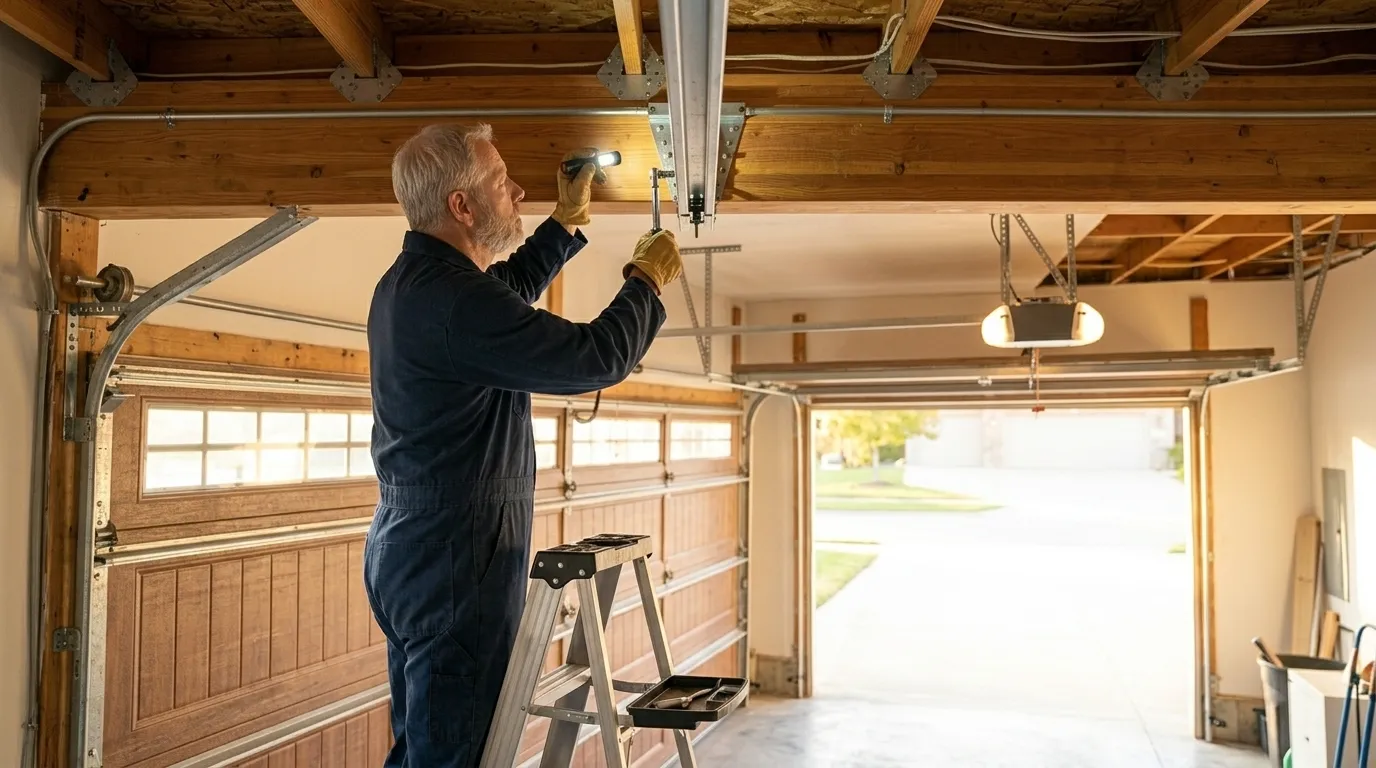
Springs, cables, tracks, rollers, and openers fixed by a tech who explains the problem before touching anything.
Learn more →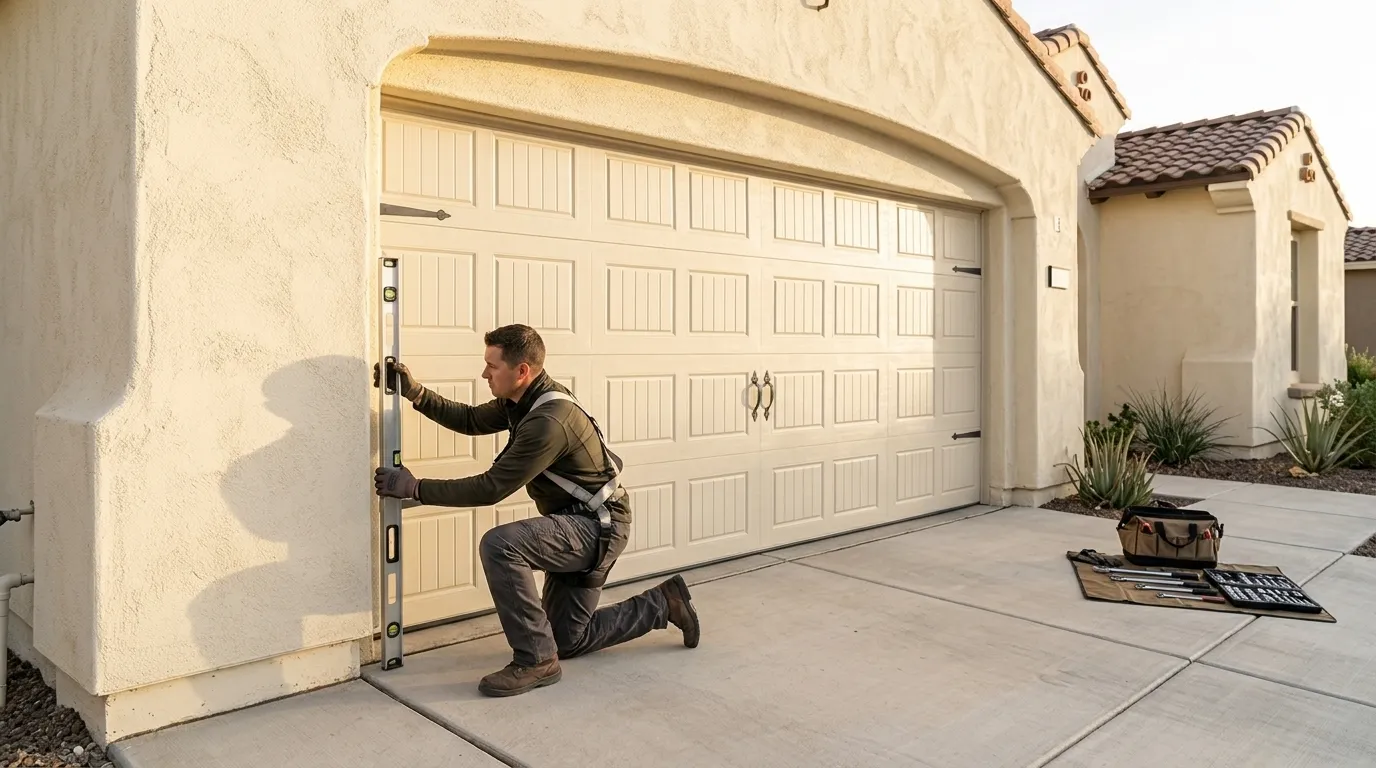
Garage Door Installation
New sectional doors sized and installed for the housing stock actually built in this area.
Learn more →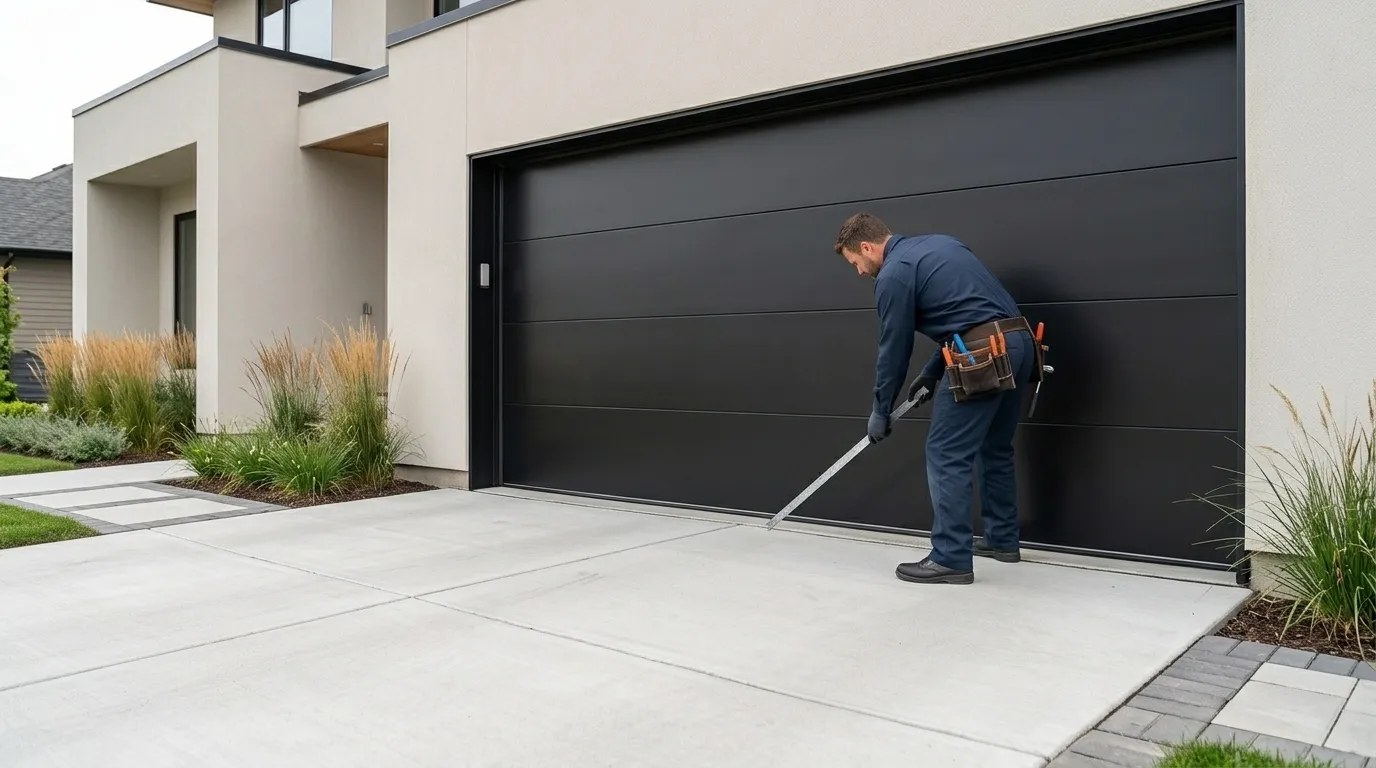
Garage Door Service
Tune-ups, lubrication, and safety checks that catch a small problem before it becomes a service call.
Learn more →Frequently Asked Questions
Why does my garage door keep coming off the track on one side only?
Usually one bracket has worked loose from the jamb while the other side is still solid, so the rail on that side has slack the roller can wander into. On houses in this area built in the 1975-2004 window, that's almost always the original fixed bracket, not a newer adjustable one, so it needs to be reset or replaced rather than just tightened.
Is a noisy track dangerous or just annoying?
It can go either way. If the noise is coming from a slightly loose roller, it's mostly annoying. If it's coming from a bracket that's pulling out of the frame, the rail can eventually drop enough for the door to bind or jump the track entirely mid-cycle, which is a real hazard, especially on a door with an opener still trying to drive it.
Can I just bend the track back myself?
You can get the door moving again, but bending steel rail back by hand leaves a stress point that fails again, often within weeks. Once rail is visibly kinked, the honest fix is swapping that section, not straightening it.
Have a Door That Needs a Second Opinion?
Call and describe what it is doing - we will tell you what it likely is.