
Olympia Garage Door Guide
What Aging Openers Cost You When the Power Cuts Out in Olympia
Olympia's 1975-2004 housing stock means original chain-drive openers are now decades old. Here's what drives replacement cost and why power cuts hit them hardest.
- Licensed & Insured
- Same-Area Service Calls
- Upfront Pricing
What It Costs
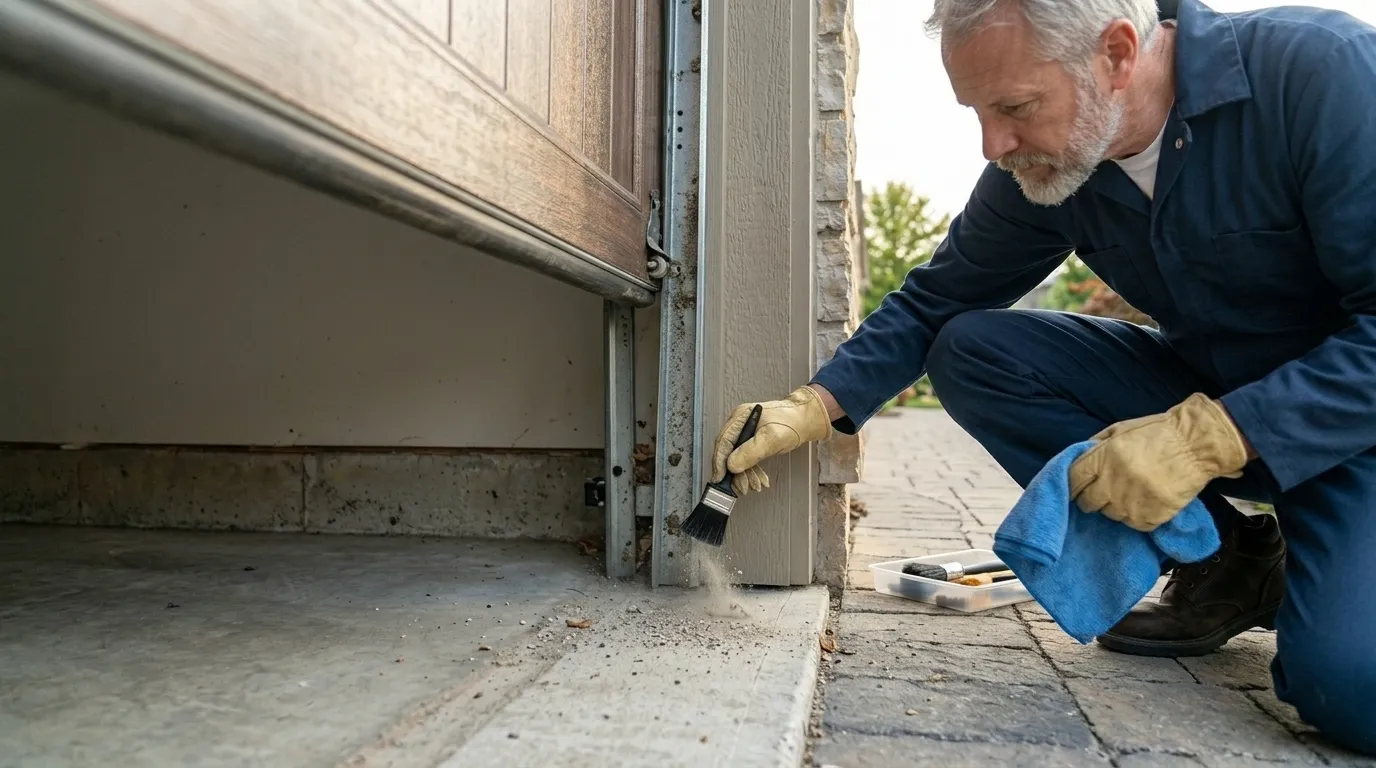
We don't post a flat number here because what you pay depends on what's actually wrong, and in a lot of Olympia homes that's an opener nobody's touched since the house was built. Most of the housing across the area's 17 named neighborhoods went up between 1975 and 2004, with the median landing around 1990. That means a huge share of openers still running today are original or one-replacement-in, chain-drive units without battery backup, without rolling code security, and often without a working manual release anyone's tested.
Repair cost hinges on whether the motor, gears, or logic board have failed, versus whether it's just the opener's age catching up with it. A same-decade unit with a bad capacitor is a cheap fix.
A 1990s chain-drive opener that's finally quit is usually a replacement conversation, because parts for those motors stopped being stocked years ago. With median household income in the service area around $88,500, most owners we talk to are weighing a full opener swap against a patch job that buys another year or two - and honestly, past a certain age, the patch job isn't worth the truck roll.
What the Weather Here Does to It
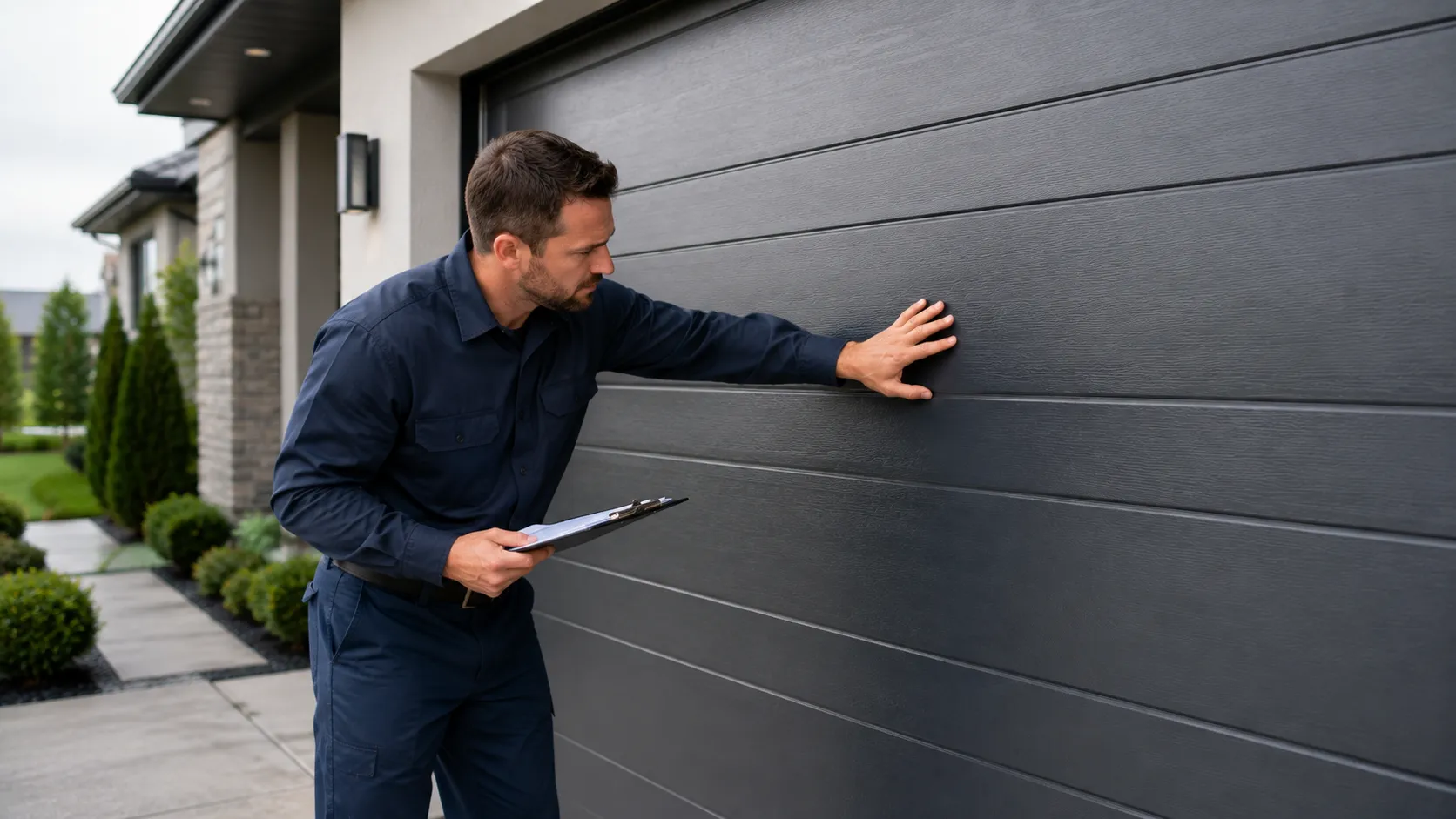
Olympia sits in a cold-moderate climate band, not the deep-freeze conditions that crack steel, but enough sustained cold and damp to matter for a mechanical opener sitting in an unheated garage. Grease in the drive gears and chain thickens in cold months, which makes the motor work harder to pull the same door it moved easily in July. Over a decade or two, that extra strain wears down gear sets faster than the manufacturer's spec sheet assumes.
The bigger issue is what cold-and-wet weather does to the power grid feeding that opener. When lines go down in a storm, an opener without battery backup is dead weight - the door won't move by remote or wall button, and if the manual release cord hasn't been pulled in years, plenty of owners find out the hard way that it's rusted stiff or was never engaged correctly. None of this is unique to any one storm; it's just what a 30-to-45-year-old motor and a house without backup power run into every time the lights go out.
The Situation
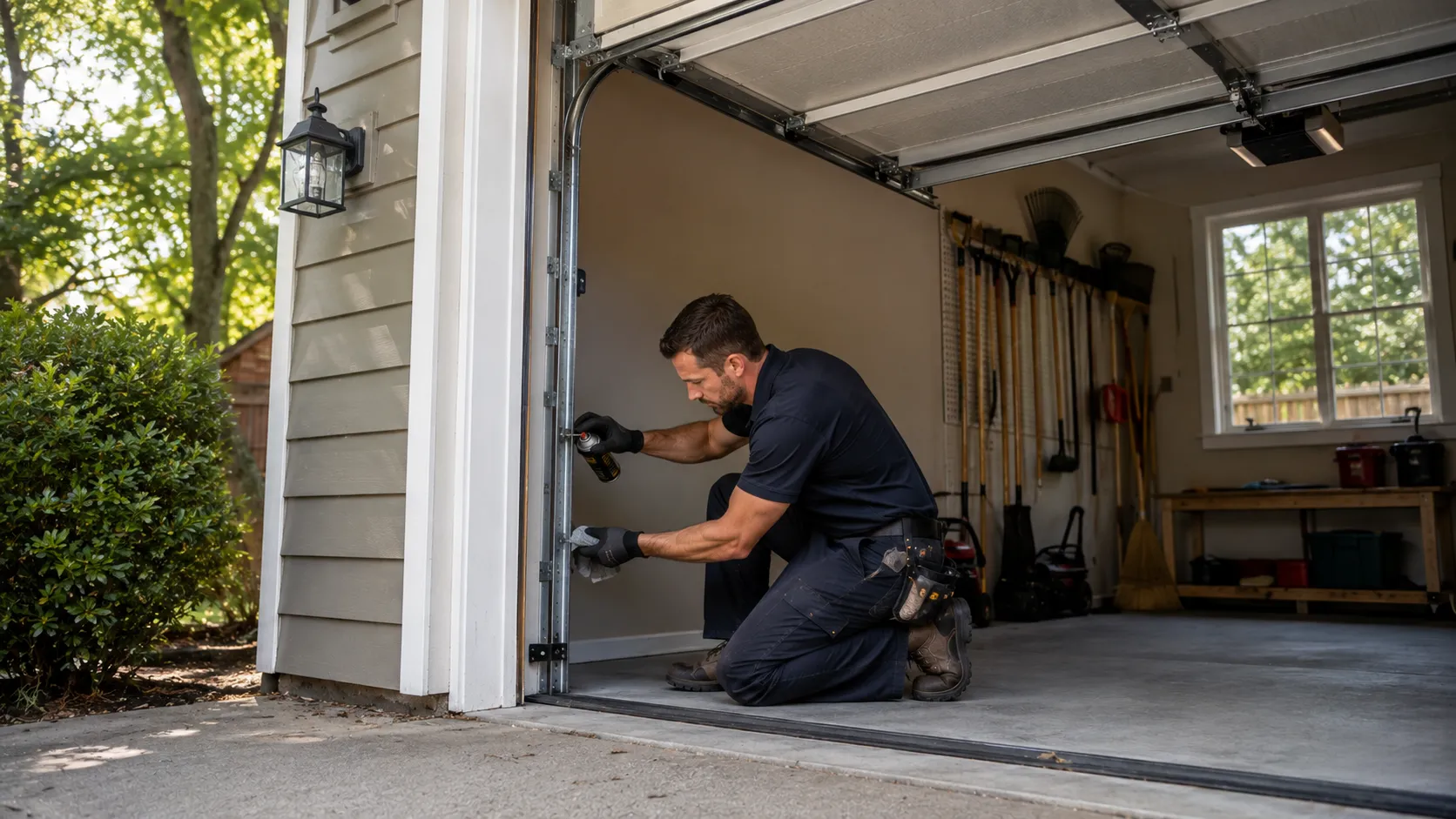
Across the service area - Downtown, North East, and the rest of the 17 named areas out to Tumwater, Tanglewilde, and the towns 12 to 19 miles out like DuPont, Yelm, and Shelton - the housing stock clusters tightly in that 1975-2004 build window. That's not a wide spread of eras with a mix of old and new hardware; it's one dominant generation of garage, and one dominant generation of opener installed when the house was framed.
With roughly 17,750 owner-occupied houses in the area, a lot of those openers are hitting the point where the motor windings, the logic board, or the gear kit are simply worn past what a $20 part fixes. We see this most in houses that have never had the opener touched since the builder's crew installed it - the sound changes first, then the response lags, then a power cut exposes that there's no backup and no working manual release. It's a predictable sequence, not bad luck.
The Common Mistake
The mistake we run into most is assuming the manual release is a fallback that's always ready. It isn't.
On an opener that's sat untouched since a house went up in the 1980s or 90s, that red cord is often rusted to the trolley or was disconnected years ago by someone who didn't reconnect it right. The first time an owner needs it - during a power cut, with the car trapped inside - is the worst time to find out it doesn't work.
The second mistake is treating a slow, straining opener as a lubrication problem every winter instead of asking whether the unit's simply reached the end of its service life. One honest limitation: we can't tell you over the phone whether your motor's fixable or done - that call takes a hands-on look at the gear kit and the logic board, and guessing wrong either way costs you a second visit.
How We Can Help
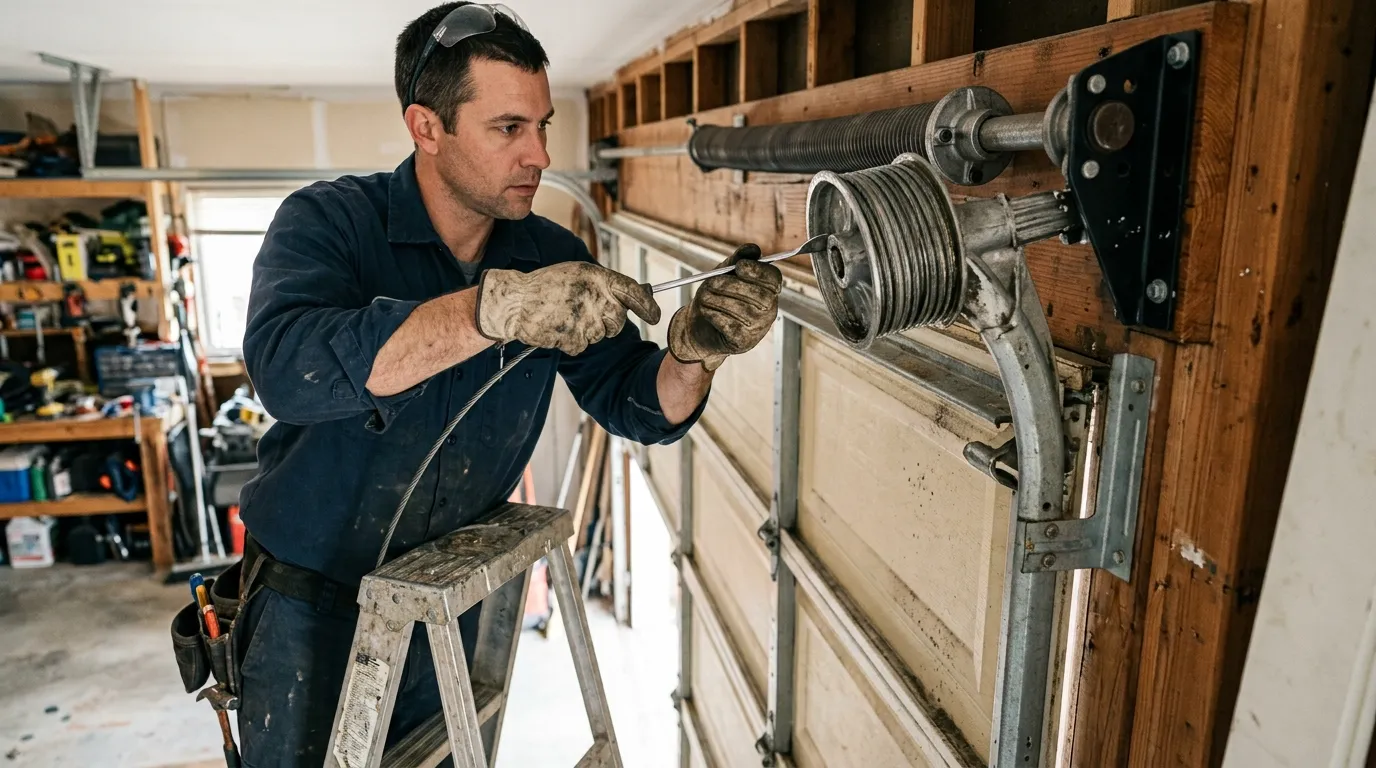
Garage Door Repair
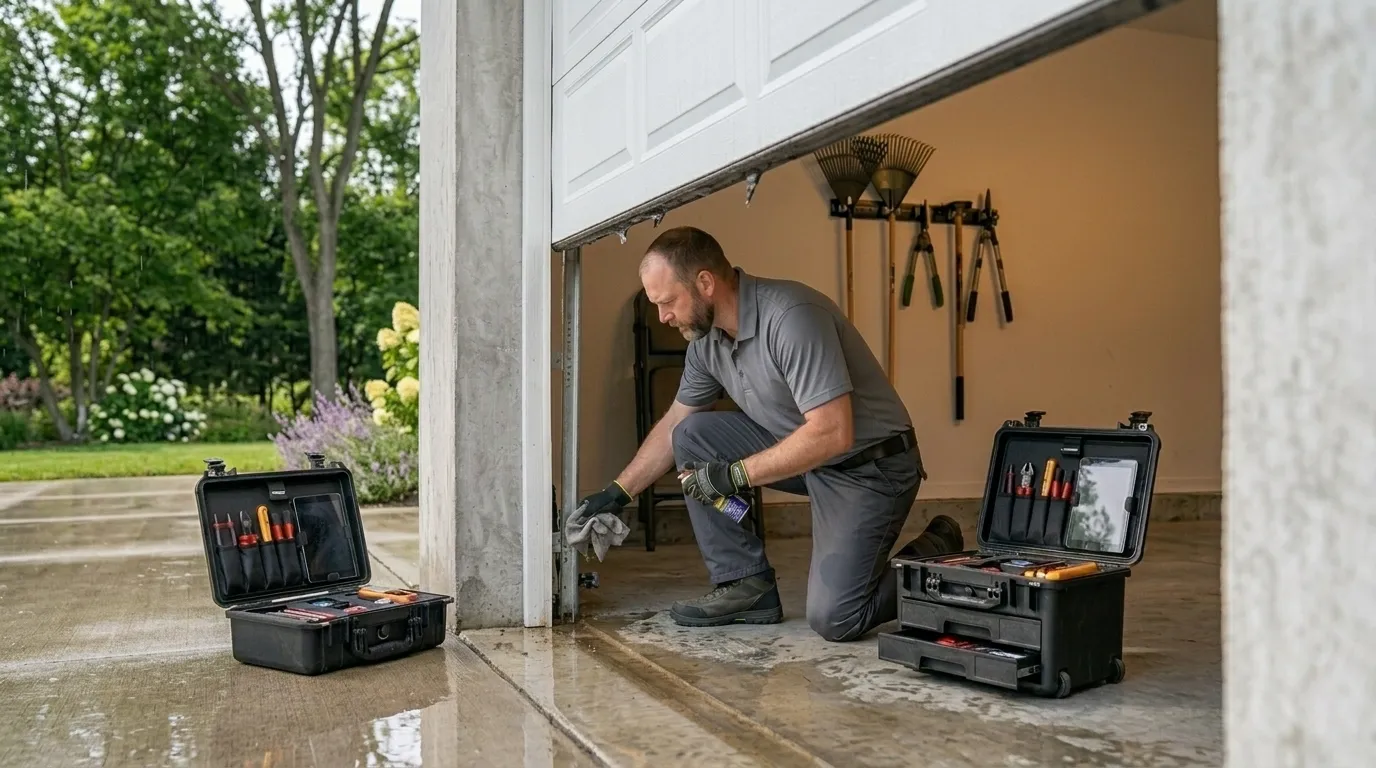
Springs, cables, tracks, rollers, and openers fixed by a tech who explains the problem before touching anything.
Learn more →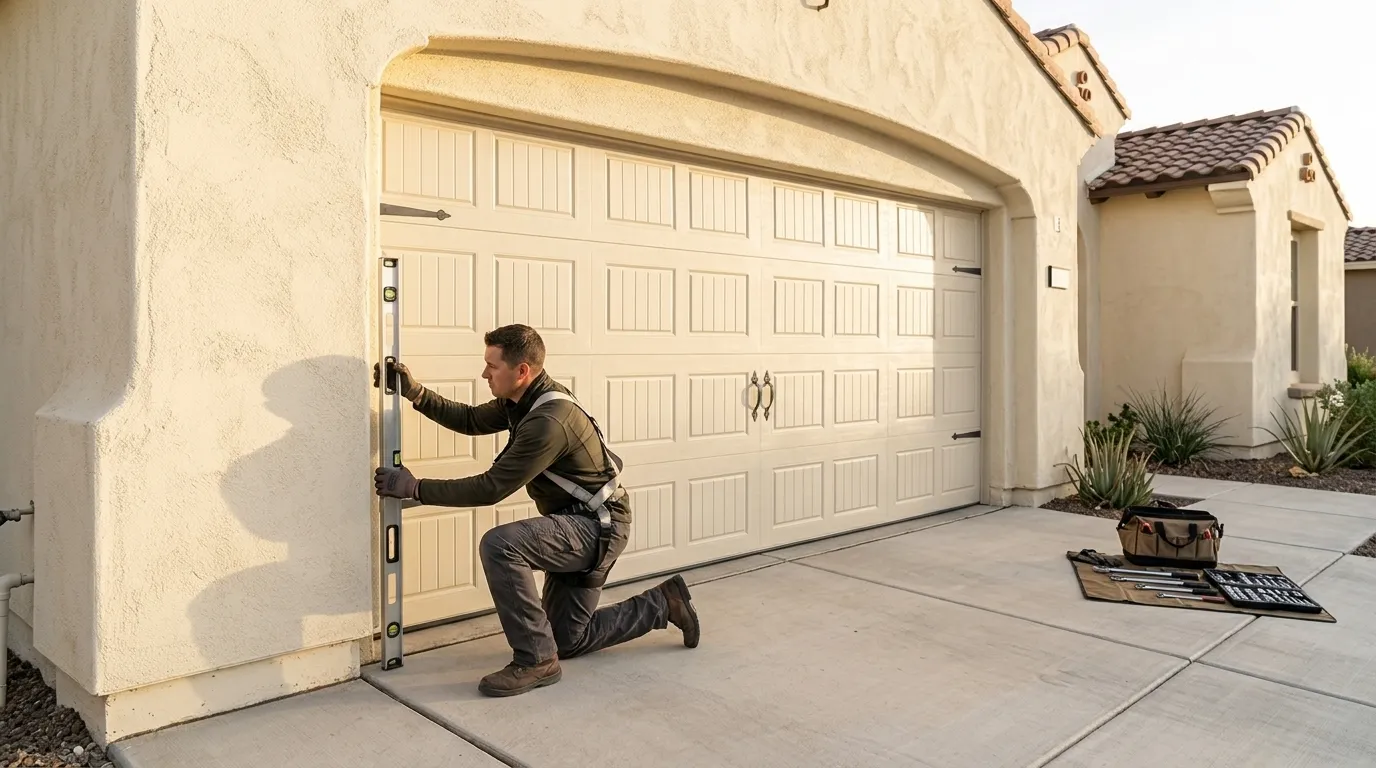
Garage Door Installation
New sectional doors sized and installed for the housing stock actually built in this area.
Learn more →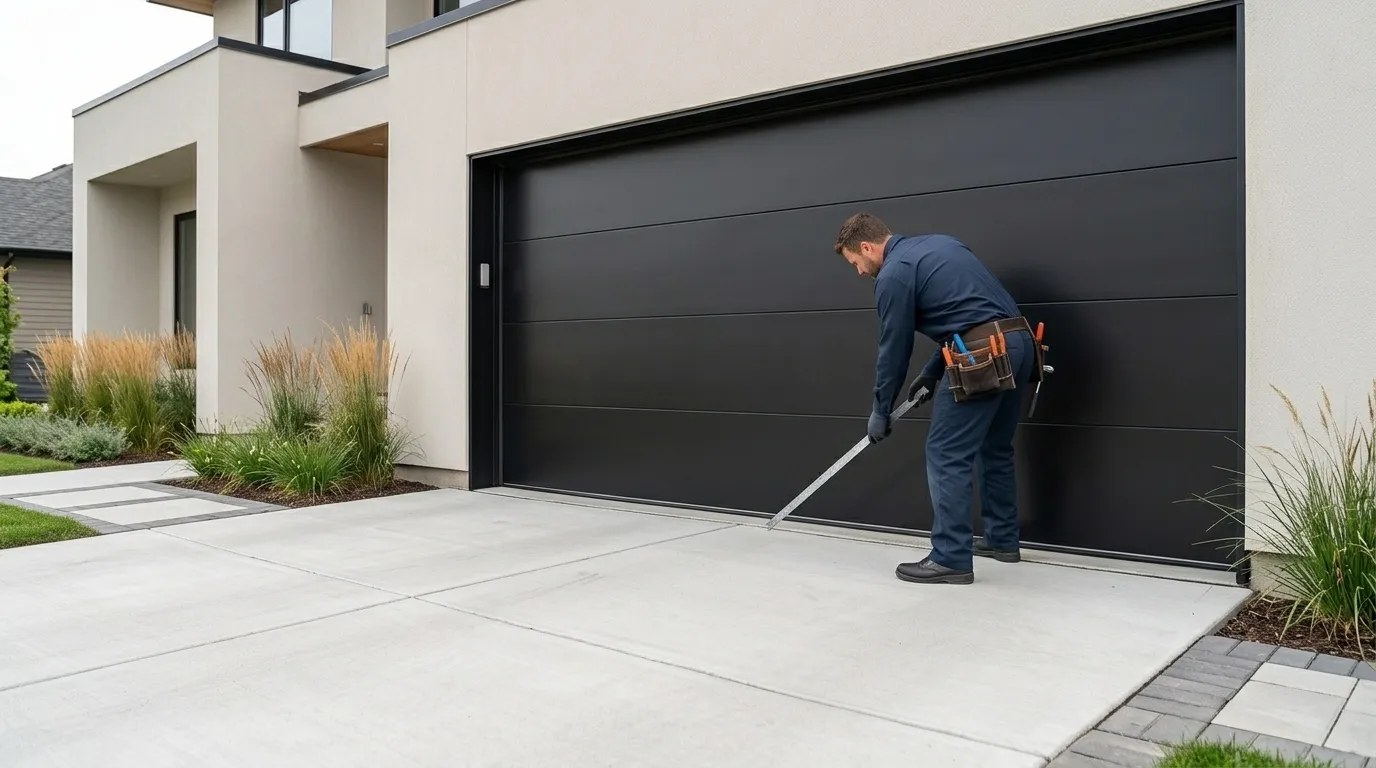
Garage Door Service
Tune-ups, lubrication, and safety checks that catch a small problem before it becomes a service call.
Learn more →Frequently Asked Questions
Why does my opener struggle more in winter than summer?
Cold thickens the grease in the drive gears and chain, so the motor works harder to move the same door. On an opener already 20-plus years old - common in houses built in the 1975-2004 window across the area - that extra strain is often what finally causes it to fail.
Does my opener have battery backup?
If your house was built in the 1980s or 90s, probably not - battery backup wasn't standard equipment then. That's why a power cut leaves the door stuck instead of switching to backup power like newer units do.
Is it worth repairing an original opener instead of replacing it?
Depends what's failed. A bad capacitor or sensor is a cheap fix on any age unit. But if the motor or gear kit on a 30-plus-year-old chain-drive opener is worn out, parts for it are often no longer stocked, which makes replacement the more sensible call.
How do I check my manual release before I need it?
Pull the red cord with the door closed and see if it disconnects the trolley cleanly. If it's stiff, rusted, or doesn't move, that's worth fixing now rather than during a power cut when you actually need it.
Have a Door That Needs a Second Opinion?
Call and describe what it is doing - we will tell you what it likely is.